

Mental Health traced to its Root.
Care that looks beyond the diagnosis, towards understanding. Precision psychiatry, rooted in biology. We offer functional and metabolic psychiatry care because symptoms are signals, not the whole story. Healing starts with the body.

Our
True healing starts with understanding what's driving your symptoms, not just naming them. Jennifer's approach looks beneath anxiety, depression, and mood imbalances to the biochemistry, hormones, and nervous system patterns underneath, building custom care plans rooted in why you feel the way you do. Anxiety, depression, ADHD, and mood imbalances rarely have a single cause.
Jennifer takes a functional and metabolic psychiatry approach, looking at the biochemistry, hormones, and nervous system patterns underneath your symptoms, not just the symptoms themselves. The goal isn't to just manage what you're feeling. It's to understand why you're feeling it, and build a plan that actually addresses it.
APPROACH

Core Mental‐Health Focus Areas

Evidence based psychiatric prescribing
Careful, ongoing monitoring
Transparent risk and benefit discussions
Collaborative tapering and deprescribing support
Symptom tracking throughout any changes
Care paced around your history and goals
Medication Management

Mood & Emotional Regulation
● Anxiety spectrum (generalized, panic, health anxiety)
● Depression — metabolic, inflammatory, and circadian contributors
● Seasonal affective patterns + light‐based interventions
● Emotional dysregulation + stress‐response recalibration

Trauma & Nervous‐System Recovery
● PTSD and complex trauma integration
● Burnout + nervous‐system exhaustion
● Somatic and polyvagal‐informed regulation
● Nature‐based resilience training

Cognitive & Executive Function
● ADHD and focus optimization
● Cognitive fatigue + metabolic support
● Sleep‐architecture repair for attention and memory
● Neurotransmitter and nutrient mapping for cognition

Hormonal & Life‐Stage Mental Health
● Peri‐Prep and Menopause transition support
● PMS/PMDD and cyclical mood patterns
● Thyroid and adrenal influence on mental health
● Sexual health and libido optimization

Stress, Sleep & Circadian Health
● Circadian misalignment and sleep disturbance
● Shift‐work and light‐exposure protocols
● Breathwork + cold exposure for stress resilience
● Lifestyle medicine for stress recovery

Metabolic & Inflammatory Mental Health
● Insulin resistance and mood instability
● Gut–brain axis dysfunction and neuroinflammation
● Nutrient deficiency impact on mood and energy
● Detoxification and mitochondrial support for mental clarity

Healthy Aging & Longevity Mindset
● Cognitive preservation and neuroplasticity training
● Sleep and circadian realignment for aging brains
● Hormone balance for vitality and mood
● Mitochondrial support for energy and focus


Beyond Traditional Psychiatry
Jennifer believes mental health cannot be addressed in isolation. Her practice is not a conventional psychiatry clinic, but a metabolic psychiatry model built on sleep and circadian alignment, nutrient-dense hydration and diet, movement and stress mitigation, and deep relationships and life purpose.
Rather than one-size-fits-all medication management, she weaves in CBT techniques, motivational interviewing, and somatic and supportive therapy as part of a comprehensive care model, never standalone talk therapy.
Currently advancing her training in Integrative and Functional Psychiatry through a fellowship with Psychiatry Redefined, and studying to sit for The Menopause Society board certification
book a clarity call

01
Functional Psychiatry
What is Functional Psychiatry?
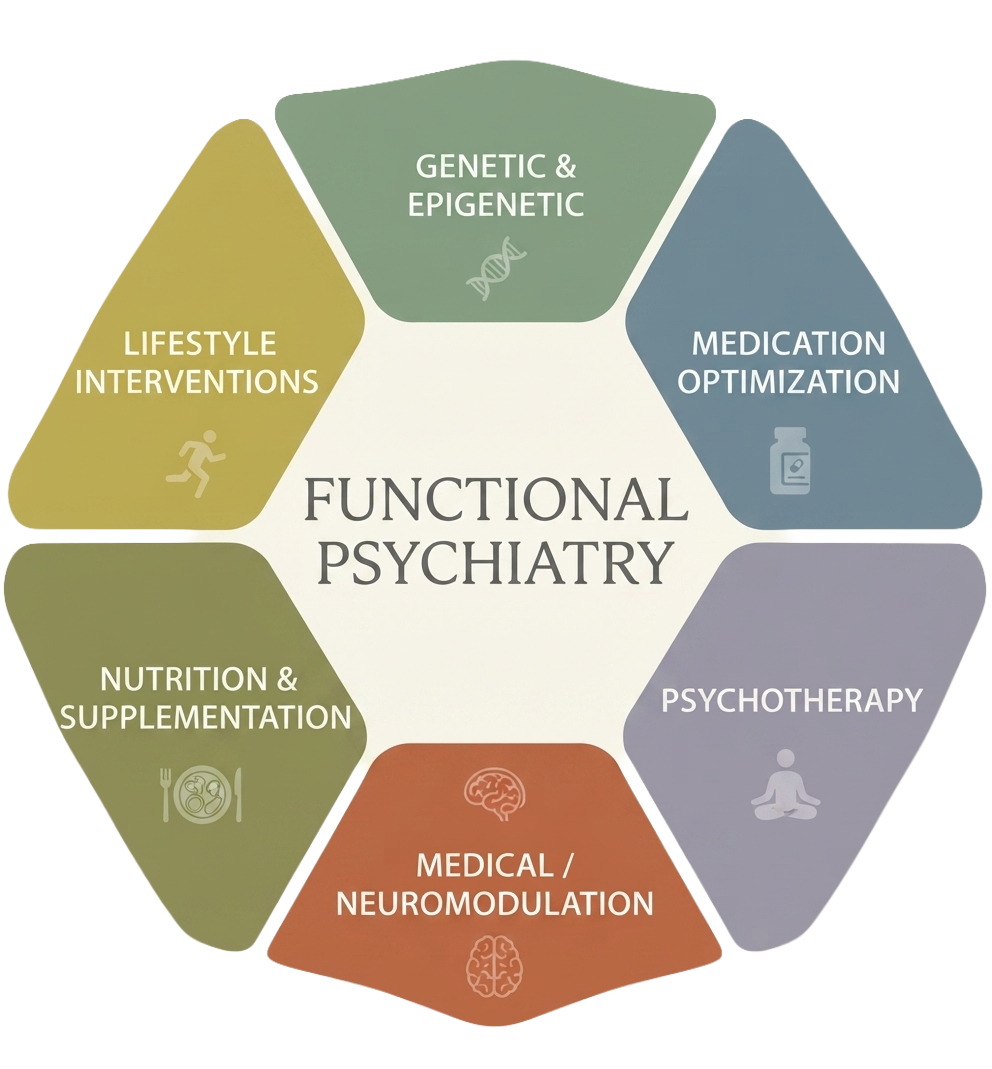
FUNCTIONAL PSYCHIATRY is an emerging field that combines traditional psychiatric practices with a holistic approach to mental health. It focuses on identifying and addressing the root causes of mental health issues rather than just treating symptoms. This approach integrates various aspects of a person's life, including their physical health, lifestyle, environment, and genetics, to create a comprehensive treatment plan.
One of the key principles of functional psychiatry is the belief that mental health is deeply interconnected with physical health. For example, imbalances in gut health, hormonal levels, or nutrient deficiencies can significantly impact mental well-being. Functional psychiatrists often use a range of diagnostic tools, such as blood tests, genetic testing, and comprehensive health assessments, to uncover underlying issues that may be contributing to a patient's mental health problems.
Treatment in functional psychiatry is highly personalized and may include a combination of conventional psychiatric medications, nutritional supplements, dietary changes, exercise, stress management techniques, and psychotherapy. The goal is to create a balanced and sustainable approach to mental health that addresses the unique needs of each individual.
Functional psychiatry also emphasizes the importance of patient education and empowerment. Patients are encouraged to take an active role in their treatment and make informed decisions about their health. This collaborative approach helps patients develop a deeper understanding of their mental health and fosters a sense of ownership and responsibility for their well-being.
A CONNECTED SYSTEM
Gut health, hormonal balance, and nutrient levels are treated as core drivers of mental well-being, not side notes.
LOOKING DEEPER
Blood work, genetic testing, and comprehensive health assessments uncover what's truly contributing to a patient's symptoms.
EMPOWERMENT
Patients are active partners in their care, building real understanding and ownership of their own healing.
A PERSONALIZED PLAN
Medication, nutrition, movement, stress management, and psychotherapy are woven together into one balanced, sustainable approach.
02
Metabolic Psychiatry
What is Metabolic Psychiatry?
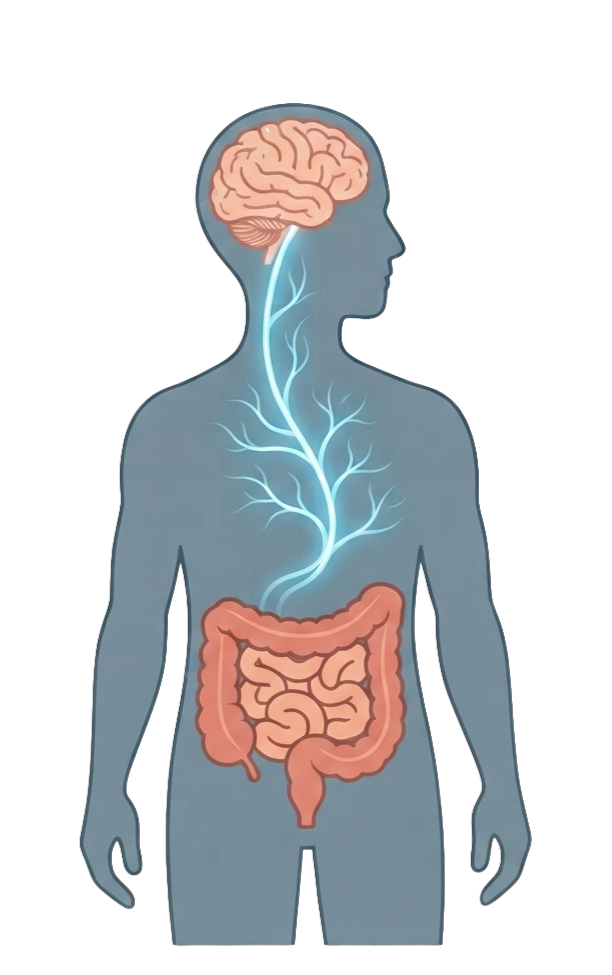
METABOLIC PSYCHIATRY is an emerging field that looks beyond neurotransmitters alone and explores how the body’s energy systems, hormones, and cellular health shape mental well‑being. At its core is the recognition that the brain is not separate from the body — it is deeply influenced by metabolism, mitochondria, and lifestyle.
Mitochondria are the “power plants” of our cells, producing the energy that every organ — including the brain — depends on. When mitochondrial function is impaired, mood, cognition, and resilience can suffer. Supporting mitochondrial health is therefore central to metabolic psychiatry. While traditional psychiatry often focuses on neurotransmitters and medications, metabolic psychiatry expands the lens to include:
Dietary strategies: protein intake, medical nutrition, ketogenic or low‑glycemic approaches.
Exercise: strength training and movement that improve insulin sensitivity and brain resilience.
Hormesis practices: cold exposure, sauna, fasting — small stressors that strengthen cellular systems.
Novel therapeutics: including GLP‑1 receptor agonists, which are being explored for their role in appetite, metabolism, and even mood regulation.
MITOCHONDRIA
Mitochondria are the power plants of our cells. When their function is impaired, mood, cognition, and resilience can suffer, making mitochondrial health central to this approach.
INTEGRATIVE
Gold-standard medication and therapy are combined with metabolic strategies, with honest conversation and informed consent at the center
WHY IT MATTERS
For patients who feel stuck in traditional models, this connects metabolism, hormones, and mental health into practical tools for resilience.
BEYOND
Diet, exercise, and hormesis practices like cold exposure or fasting are paired with novel therapeutics, including GLP-1 agonists, to support mood and metabolism.
Frequently Asked Questions About Functional & Metabolic Psychiatry
Functional psychiatry combines traditional psychiatric care with a whole-body approach. Instead of only treating symptoms, it looks for root causes like gut health, hormone imbalances, nutrient deficiencies and genetics. Treatment is personalized and may include medication, nutrition, supplements, lifestyle changes and therapy techniques.
What is functional psychiatry?
1
Metabolic psychiatry explores how your body’s energy systems, hormones and cellular health shape your mental health. It recognizes that the brain depends on healthy metabolism and mitochondria. Care may include nutrition strategies, strength training, sleep and circadian support, and, when appropriate, therapies like GLP-1 medications alongside traditional psychiatric treatment.
What is metabolic psychiatry?
2
5
Yes. Jennifer Theriault, PMHNP-BC, is a psychiatric nurse practitioner who provides evidence-based medication management. She takes time to discuss risks and benefits, monitors you closely, and pairs medication with metabolic, nutritional and lifestyle support so it isn’t your only tool. Jennifer offers collaborative tapering and deprescribing support when it’s clinically appropriate. Any changes are made slowly and safely, with careful monitoring and symptom tracking throughout. Never stop or change a psychiatric medication on your own without medical guidance.
Do you prescribe medication? Can you help me reduce or stop my medications?
3
Can hormones affect anxiety and depression?
What conditions do you treat?
4
Jennifer treats anxiety, depression, ADHD, PTSD, OCD, bipolar disorder and other mood conditions. She also supports burnout, sleep and circadian issues, cognitive fatigue, and mood changes linked to hormones, including PMDD, perimenopause and menopause. Care focuses on why symptoms are happening, not just naming them.
Yes. Hormones like estrogen, progesterone, testosterone, cortisol and thyroid hormones influence the brain systems that regulate mood, focus and sleep. Shifts during the menstrual cycle, postpartum or perimenopause can intensify symptoms or change how well medications work. Jennifer considers hormones as part of every mental health evaluation.
Our Process
-
![Vintage orange rotary telephone on a wooden table against a dark background]()
01 Book Your Clarity Call
This is where we start. A focused conversation to talk through what's going on, what you've already tried, and whether this practice is the right fit for what you need.
-
![Person in a gray uniform reviewing a document on a clipboard]()
02 Your Evaluation
A full picture look at your symptoms, history, physiology, and goals. This goes beyond a checklist. We're looking at what's actually driving how you feel, not just naming it.
-
![Silhouettes of four people raising their arms against an orange sunset sky]()
03 A Path Built Around You
From there, we build a plan that fits your body and your life. That might mean medication management, functional lab work, nervous system support, nutrition, or a combination. Nothing generic, nothing off the shelf.
-
![Silhouette of a person with arms outstretched at sunset over misty mountains]()
04: Ongoing Care, Adjusted As You Go
Healing isn't a straight line, so your plan won't be either. We track what's working, adjust what's not, and keep moving toward steady ground.